 Stoic Quotes Daily
“… I make the New Year happy and prosperous by good thoughts and greatness of soul …”
Seneca, Letters 87.3
What it means
What makes my new year a good one is what I think and how I carry myself.
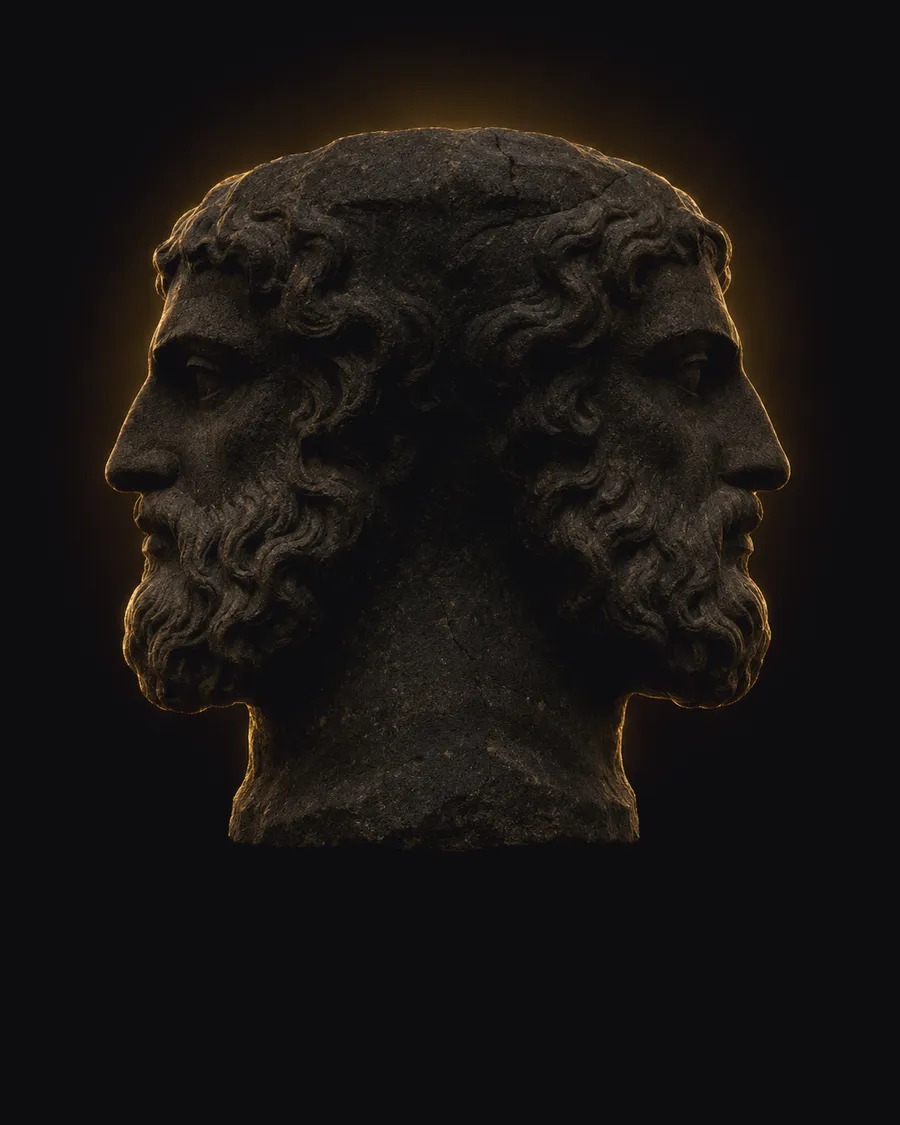
25 passages on starting, slipping and starting again by Seneca, Epictetus and Marcus Aurelius. Seven of them make a plan for the first week of January.
In the Stoic Quotes app. 3 days free on the annual plan.
The Stoics cared little about the date. They held that you can begin at any hour and begin again after every failure. Seneca adds that keeping an old resolution matters more than making a new one.
One sentence of his Letters is about the New Year, and it involves figs.
“… I make the New Year happy and prosperous by good thoughts and greatness of soul …”
Seneca, Letters 87.3
What makes my new year a good one is what I think and how I carry myself.
In Letter 87 he is on the road with a friend, one carriage and a mattress on the ground. He eats dried figs with his bread, and on days without bread the figs take its place. That is why every day feels like New Year to him: the translator’s note explains that figs of this kind were a New Year’s gift, their sweetness standing for the good wishes of the sender. He was no friend of the season otherwise. Of the Saturnalia in December he writes that the whole city is “in a sweat” (Letter 18.1).
Seneca makes fun of fresh starts, which puts him in a minority in January. Marcus catches himself doing it.
“The fool, with all his other faults, has this also,—he is always getting ready to live.”
A saying quoted by Seneca, Letters 13.16
The fool's life is always about to begin.
“… life is so short; and we make it still shorter by our unsteadiness, by making ever fresh beginnings at life, now one and immediately another. We break up life into little bits, and fritter it away.”
Seneca, Letters 32.2
Life is short, and starting over again and again makes it shorter. We crumble it and let the crumbs go.
“… thou choosest rather to become good to-morrow than to be good to-day.”
Marcus Aurelius, Meditations 8.22
You would sooner become good tomorrow than be good today.
“Let us only make a beginning. Trust to me, and you will see.”
Seneca says the first step tastes bad and the wish is most of the work. Epictetus says two things that pull in different directions: start today, and do not expect the fig tomorrow.
“The mind must, therefore, be forced to make a beginning; from then on, the medicine is not bitter …”
Seneca, Letters 50.9
You have to force yourself to start. After that it stops tasting bad.
“… the larger part of goodness is the will to become good.”
Seneca, Letters 34.3
Wanting to become a good person is most of the way to being one.
“If it is good to use attention to-morrow, how much better is it to do so to-day?”
Epictetus, Discourses 4.12
If paying attention is a good plan for tomorrow, it is a better one for today.
“Nothing great, said Epictetus, is produced suddenly, since not even the grape or the fig is.”
Epictetus, Discourses 1.15
Nothing great happens overnight. Even a fig needs time.
“If a thing is difficult to be accomplished by thyself, do not think that it is impossible for man: but if anything is possible for man and conformable to his nature, think that this can be attained by thyself too.”
Marcus Aurelius, Meditations 6.19
Hard for you does not mean impossible. If a human can do it, so can you.
Chapter 3.25 of the Discourses is addressed to people who have fallen off from their purpose, which is a useful address by the middle of January.
“… no man hinders us from renewing the combat again, and we are not compelled to wait for another four years that the games at Olympia may come again; but as soon as you have recovered and restored yourself, and employ the same zeal, you may renew the combat again …”
Epictetus, Discourses 3.25
Athletes wait four years for the next Olympic games. You can try again as soon as you are back on your feet.
“Has the boy fallen? Rise, they say, wrestle again till you are made strong.”
Epictetus, Discourses 4.9
When a boy goes down, his wrestling coach tells him to get up and go again until he is strong.
“And indeed this very fact is proof that my spirit is altered into something better,—that it can see its own faults, of which it was previously ignorant.”
Seneca, Letters 6.1
I can see faults in myself that I never noticed before, and that shows I am improving.
“There remains much more of the road than we have put behind us; but the greater part of progress is the desire to progress.”
Seneca, Letters 71.36
There is more road ahead than behind. Wanting to move is already most of the way.
Marcus closes the books on the past, all of it. Seneca would rather catch up, and leave his faults behind on the way.
“Consider thyself to be dead, and to have completed thy life up to the present time; and live according to nature the remainder which is allowed thee.”
Marcus Aurelius, Meditations 7.56
Take your life so far as finished. Live what is left, and live it well.
“Is any man afraid of change? Why, what can take place without change?”
Marcus Aurelius, Meditations 7.18
Afraid of change? Name one thing that happens without it.
“Let us do what men are wont to do when they are late in setting forth, and wish to make up for lost time by increasing their speed—let us ply the spur.”
Seneca, Letters 68.13
People who set out late ride faster. Let us do the same.
“Of this one thing make sure against your dying day,—let your faults die before you die.”
Seneca, Letters 27.2
Make sure your faults go first.
One passage a day and a few minutes with a pen. It works in any other week too.
Write down what you set out to do last year. Put a check next to what you managed and leave the rest as it is, without excuses.
“Consider as to the things which you proposed to yourself at first, which you have secured, and which you have not …”
Epictetus, Discourses 3.25
Go through what you set out to do. See which parts you managed and which you did not.
From the unchecked ones, choose one you still want. Make no new resolution today.
“… it is more important for you to keep the resolutions you have already made than to go on and make noble ones.”
Seneca, Letters 16.1
Keep the promises you already made to yourself before you make finer ones.
Under the one you kept, write what has to happen first and what will follow. Include the dull and the painful. The passage goes on with the athlete’s diet, the heat, the dust and the sprained ankle, and asks if you still want to go.
“In every act observe the things which come first, and those which follow it; and so proceed to the act.”
Epictetus, Enchiridion 29
Before you start something, look at what it takes first and what comes after it. Then start.
Epictetus counts days without anger. Put your own habit in its place and make the first mark on the calendar.
“If then you wish not to be of an angry temper, do not feed the habit: throw nothing on it which will increase it: at first keep quiet, and count the days on which you have not been angry.”
Epictetus, Discourses 2.18
To lose a bad temper, stop feeding it. Stay quiet at first and count the days without anger.
Do the smallest version of the thing you are sure you cannot do. Marcus noticed that the left hand, clumsy at all else, holds the reins better than the right.
“Practise thyself even in the things which thou despairest of accomplishing. For even the left hand, which is ineffectual for all other things for want of practice, holds the bridle more vigorously than the right hand; for it has been practised in this.”
Marcus Aurelius, Meditations 12.6
Practice even what you think you will never manage. The left hand is clumsy at everything except the reins, because it holds them every day.
Decide today what you will do on the evening you fail. One sentence is enough, and it should contain the word “again.”
“Be not disgusted, nor discouraged, nor dissatisfied, if thou dost not succeed in doing everything according to right principles, but when thou hast failed, return back again …”
Marcus Aurelius, Meditations 5.9
Do not lose heart when you fall short. When you fail, come back.
Before bed, read your week and treat this day as complete in itself. Tomorrow you get another one, in no way special.
“Therefore, my dear Lucilius, begin at once to live, and count each separate day as a separate life.”
Seneca, Letters 101.10
Start living now, and treat each day as a whole life.
It travels under his name, as Thesaurus.com also notes.
Disputed: “Every new beginning comes from some other beginning’s end.”
It is in none of Seneca’s 124 Letters to Lucilius. We searched the full text of Gummere’s translation, and Basore’s of On the Shortness of Life. We did not search all his other works, and the author of the line makes that unnecessary.
The words come from “Closing Time” by Semisonic, a 1998 single written by Dan Wilson. American Songwriter asked Wilson about the claim that he had taken them from Seneca the Younger. His answer: “I think that’s a fanciful falsehood. I made that up.” Songfacts calls it an original line as well. We did not find out who first put Seneca’s name under it.
Wilson says he realized while writing that the song was also about being born. Seneca has a passage on that theme, in Letter 102.26: the day you fear as the end of everything, he says, is a birthday. It is about death, so check before you put it on a New Year’s card.
Two minutes with Letters 16.1, for those who want a single step instead of seven.
No. It is a line from the 1998 song Closing Time by Semisonic. Its writer, Dan Wilson, was asked about Seneca in an interview and answered: "I made that up." The sentence is not in Seneca's 124 Letters, which we searched in full.
Seneca, Letters 101.10: "Therefore, my dear Lucilius, begin at once to live, and count each separate day as a separate life." For a card that has to stay short, Epictetus, Discourses 2.19: "Let us only make a beginning."
They were in favor of starting and wary of always starting over. Seneca warns against making ever fresh beginnings (Letters 32.2) and asks you to keep the resolutions you already have (16.1). Epictetus says you may renew the fight as soon as you are back on your feet (Discourses 3.25).
Yes, in one sentence of Letters 87.3. He is traveling with almost no luggage and eats dried figs, and he says good thoughts and greatness of soul make his New Year happy and prosperous.