Stoic Quotes Daily Try it free

Memento mori meaning

Memento mori is Latin for “remember that you must die.” The Stoics practiced the thought without using the phrase, which is in none of their texts we searched.

In the Stoic Quotes app. 3 days free on the annual plan.

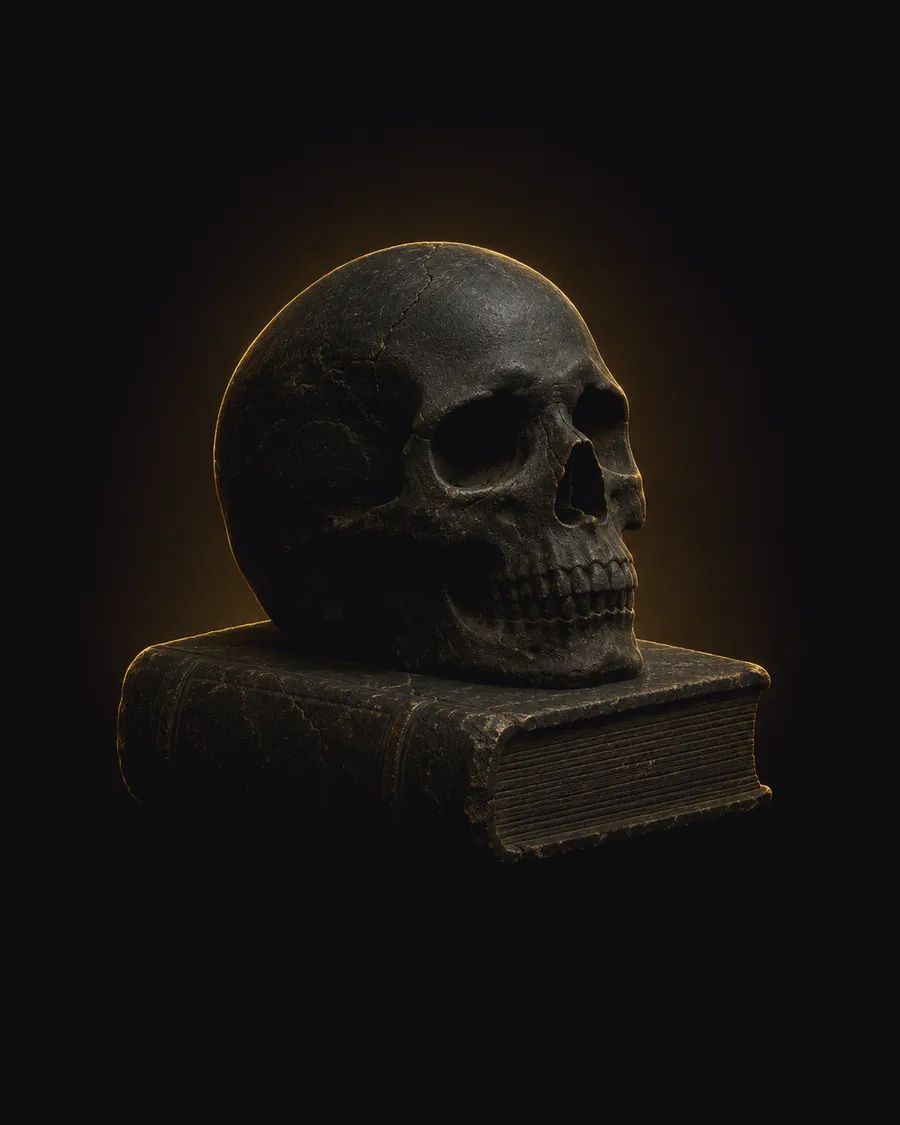
A memento mori is also a thing: a skull on a desk, a ring, a painting with an hourglass. The object says what the phrase says, that your time ends, and leaves you to decide what to do about it.

Translation, grammar and pronunciation

Two words, one of them an order.

WordFormMeaning
mementōfuture imperative of meminī, to rememberremember, keep in mind
morīpresent infinitive of morior, to dieto die, dying

Wiktionary gives the literal sense as “be mindful of dying.” The infinitive also allows “remember to die,” which sounds like an item on a to-do list and is why most people translate the sense instead: remember that you must die.

In classical Latin it sounds roughly like meh-MEN-toh MOH-ree. American speakers usually say muh-MEN-toh MOR-ee, and Dictionary.com lists MOR-eye as well. As an English noun the plural can stay the same: one memento mori, two memento mori.

Where the phrase and the custom come from

The man behind the general is documented. His famous line is not.

The story goes that a slave stood behind a Roman general in his victory parade and whispered “memento mori.” Bernhard Woytek of the Austrian Academy of Sciences collected ten passages about this attendant, from Pliny in the first century to Tzetzes in the twelfth. Most of them have somebody or something remind the general to look behind him or to remember that he is human. The words memento mori are in none. The popular version, Woytek notes, is put together from several texts, because no single one contains all of it.

SourceWhat it says
Epictetus, Discourses 3.24People stand behind men in their triumphs and remind them that they are mortal. He uses it to make a point about love.
Juvenal, Satires 10.41 to 42A public slave rides in the same chariot so that the consul does not get too pleased with himself. Nobody speaks, and the scene is a circus procession.
Tertullian, Apologeticus 33.4“Respice post te! Hominem te memento!” In Thelwall’s English: “Look behind thee; remember thou art but a man.”
Cassius Dio, as retold by Zonaras 7.21A public slave holds a crown over the general and says “look behind.”
Jerome, Letter 39.2A companion on the chariot says “hominem te esse memento,” remember that you are human.

Tertullian is the only writer of the group with the complete warning. The slave’s status is also shaky: Juvenal and the writers who follow Cassius Dio call him a public slave, while for Jerome he is a companion.

In English the two words are first recorded in 1585 to 1595. Shakespeare used them soon after: in Henry IV, Part 1 (act 3, scene 3) Falstaff tells Bardolph he makes as good use of his face “as many a man doth of a Death’s head, or a memento mori.”

“Do not act as if thou wert going to live ten thousand years. Death hangs over thee. While thou livest, while it is in thy power, be good.”
Marcus Aurelius, Meditations 4.17

What the Stoics wrote about remembering death

Marcus and Epictetus reached us in Greek, so a Latin phrase was never likely there. Seneca wrote Latin and does not have it either.

The Meditations and Epictetus are Greek texts. We searched the English of the Meditations, the Discourses, the Enchiridion and Seneca’s Letters, and the Latin of the Letters and essays in the Latin Library (books 4 to 7 of On Benefits are missing there). The closest Latin is meditare mortem, “think on death,” in Letter 26.8, and Seneca says he borrowed it from Epicurus.

“Therefore, let us so order our minds as if we had come to the very end. Let us postpone nothing. Let us balance life’s account every day.”

Seneca, Letters 101.7

What it means

Set your mind as if this were the end. Put nothing off, and settle up with life each day.

“For every day a little of our life is taken from us; even when we are growing, our life is on the wane.”

Seneca, Letters 24.20

What it means

We lose a bit of life every day, even in the years when we are still growing up.

“You do not know where death awaits you; so be ready for it everywhere.”

Seneca, Letters 26.7

What it means

Death could meet you anywhere, so be prepared wherever you are.

“Let death and exile and every other thing which appears dreadful be daily before your eyes; but most of all death: and you will never think of any thing mean nor will you desire any thing extravagantly.”

Epictetus, Enchiridion 21

What it means

Look at the things you dread every day, death above all. Petty thoughts and wild cravings will not get far.

“Do you also remind yourself in like manner, that he whom you love is mortal …”

Epictetus, Discourses 3.24

What it means

Remind yourself, too, that the person you love will die one day.

“I must die. Must I then die lamenting?”

Epictetus, Discourses 1.1

What it means

Dying is not my choice. Whether I complain about it is.

“Since it is possible that thou mayest depart from life this very moment, regulate every act and thought accordingly.”

Marcus Aurelius, Meditations 2.11

What it means

You could leave life at this moment. Act and think with that in mind.

“The perfection of moral character consists in this, in passing every day as the last, and in being neither violently excited nor torpid nor playing the hypocrite.”

Marcus Aurelius, Meditations 7.69

What it means

A finished character spends each day as if it were the last, without frenzy, without dullness and without pretending.

Is memento mori positive or negative?

For the Stoics it was a practical thought with a cheerful use.

Seneca draws two things from it. Someone who has made peace with dying is hard to threaten, and someone who counts each new day as a bonus has a reason to enjoy it. He tells the story of Pacuvius, who held a funeral feast for himself and was carried to bed while his attendants sang that he had lived his life. Seneca keeps the idea and drops the party (Letter 12.8 and 12.9).

“And if God is pleased to add another day, we should welcome it with glad hearts.”

Seneca, Letters 12.9

What it means

If you are given one more day, be glad of it.

“He who has learned to die has unlearned slavery; he is above any external power, or, at any rate, he is beyond it.”

Seneca, Letters 26.10

What it means

Someone who is no longer afraid to die cannot be forced into anything by fear.

“Consider thyself to be dead, and to have completed thy life up to the present time; and live according to nature the remainder which is allowed thee.”

Marcus Aurelius, Meditations 7.56

What it means

Take your life so far as finished. Live what is left, and live it well.

Memento vivere, the opposite

“Remember to live,” built on the same pattern.

Vivere is the infinitive of “to live,” so memento vivere answers memento mori word for word. Nietzsche uses the pair in his essay on history. The memento mori, he says, was the crown of medieval knowledge, and the opposite message, memento vivere, “is spoken rather timidly” (Adrian Collins’s translation, 1909). We found no ancient author who wrote memento vivere.

Carpe diem is the ancient cousin. Horace ends Odes 1.11 with it: time runs while we talk, so pick the day and trust tomorrow as little as you can. He reaches memento vivere by way of memento mori.

For the Stoics the two belong together anyway. Seneca asks for a mind that has “come to the very end” and for a life that postpones nothing, in neighboring sentences of the same letter.
Memento mori in the Church and in art

Christians kept the reminder and changed what comes after it.

The Bible verse behind much of it is Ecclesiasticus 7:40, in the Douay-Rheims version: “In all thy works remember thy last end, and thou shalt never sin.” On Ash Wednesday, in the words of a papal homily, the ashes “remind us that we are dust and to dust we will return.” The aim there is repentance and the life to come. The Stoic aim is a better use of this one.

In painting, the plainest version is a portrait with a skull. Tate lists the other usual signs as hourglasses or clocks, dead or guttering candles, fruit and flowers, and names the vanitas still life as a close relative. The best known hidden one is in Holbein’s The Ambassadors in London: a stretched shape between the two men’s feet, which turns into a skull when you look up at it from the bottom right corner.

What people do with it today

Tattoos, calendars, and an older evening habit.

When we looked up the meaning on Google in November 2026, the first related search was the tattoo. The related searches for a memento mori calculator were about calendars, the kind that shows a life as a grid of weeks. You can fill one in with our memento mori calculator.

The older uses need no ink:

  • At night, settle the account of the day, as Seneca says in Letter 101.7. What did you put off that you could have done?
  • Before a decision, ask what you would choose if the time were short. Marcus does this in 2.11.
  • When you embrace someone you love, remember that they are mortal too. Epictetus means it as preparation for losing them.

A lesson from the app

The commentary from “Memento Mori,” one of the 29 short lessons in Stoic Quotes. It explains Letter 101.

Lesson: Memento Mori

Seneca urges us to live each day as though it could be our last — not out of fear, but out of urgency to live fully. When we settle our accounts daily, we ensure that no word goes unsaid, no kindness is delayed, and no day is wasted on triviality.

Questions

What is the full memento mori quote?

The phrase is complete with its two words. The longer warning often quoted with it comes from Tertullian, Apologeticus 33.4: "Respice post te! Hominem te memento!" It means: look behind you, remember that you are a human being.

Who said memento mori first?

We found no known first author. In English the phrase is recorded from the years 1585 to 1595, and Shakespeare’s Falstaff uses it in Henry IV, Part 1.

Is memento mori a Catholic thing?

Partly. Ecclesiasticus 7:40 says to remember your last end in all your works, and the ashes of Ash Wednesday carry the same message. Seneca and Epictetus, who were not Christians, gave similar advice for other reasons.

What is the opposite of memento mori?

Memento vivere, “remember to live.” Nietzsche sets the two phrases against each other in his essay on history. We found no ancient source for it.

How do you pronounce memento mori?

In classical Latin roughly meh-MEN-toh MOH-ree. In American English muh-MEN-toh MOR-ee; dictionaries also list MOR-eye for the second word.

Try the app free for 3 days